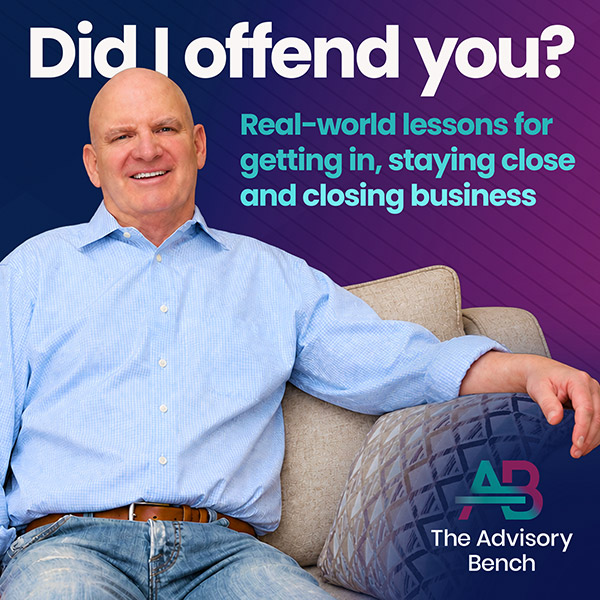
How CEO Chris Hessler Thinks
The Philosophy Behind The Advisory Bench

When I first meet with a CEO, I'm usually not focused on financial statements or organizational charts. I'm listening for recurring challenges, stalled decisions, and the problems that keep showing up over and over again. Those patterns often reveal where the right advisor can have the greatest impact.
1
Better Perspective Creates Better Decisions
I've spent years working with CEOs and business leaders, and I've come to believe that most business problems aren't caused by a lack of intelligence, effort, or ambition. More often, they're caused by limited perspective. Sometimes the right conversation with the right person can completely change the direction of a company.
2
Growth Changes the Job
What gets a business from $1 million to $5 million in revenue often won't get it to $25 million. As companies grow, the challenges become more complex, and leaders need access to new experiences, different viewpoints, and expertise they haven't needed before.
3
Hard Work Has Limits
I'm a big believer in hard work, but there comes a point where simply working longer hours stops producing better outcomes. Sustainable growth comes from making better decisions, not just working harder. That's where the right advisors can make a tremendous difference.
4
Advisory Benches Matter
The best Advisory Benches aren't there to tell you what you want to hear. They're there to challenge assumptions, pressure-test ideas, and help you see opportunities and risks you might otherwise miss. Good advisors bring clarity, not validation.
5
Leadership Isn't a Solo Sport
The strongest CEOs I've worked with don't pretend to have all the answers. They intentionally surround themselves with people who have faced challenges they've never encountered and solved problems they've never had to solve.
6
Hiring Starts Before Recruiting
Long gone are the days when everyone who worked at a company was a full time W2 employee. There are contractors, part-timers, project experts, fractional employees, and agencies. The problem is that the talent market is structured into silos where recruiting companies focus on just one type of talent. CEO's need a fast and effective one-stop shop where the hiring choice is built on their unique needs.